
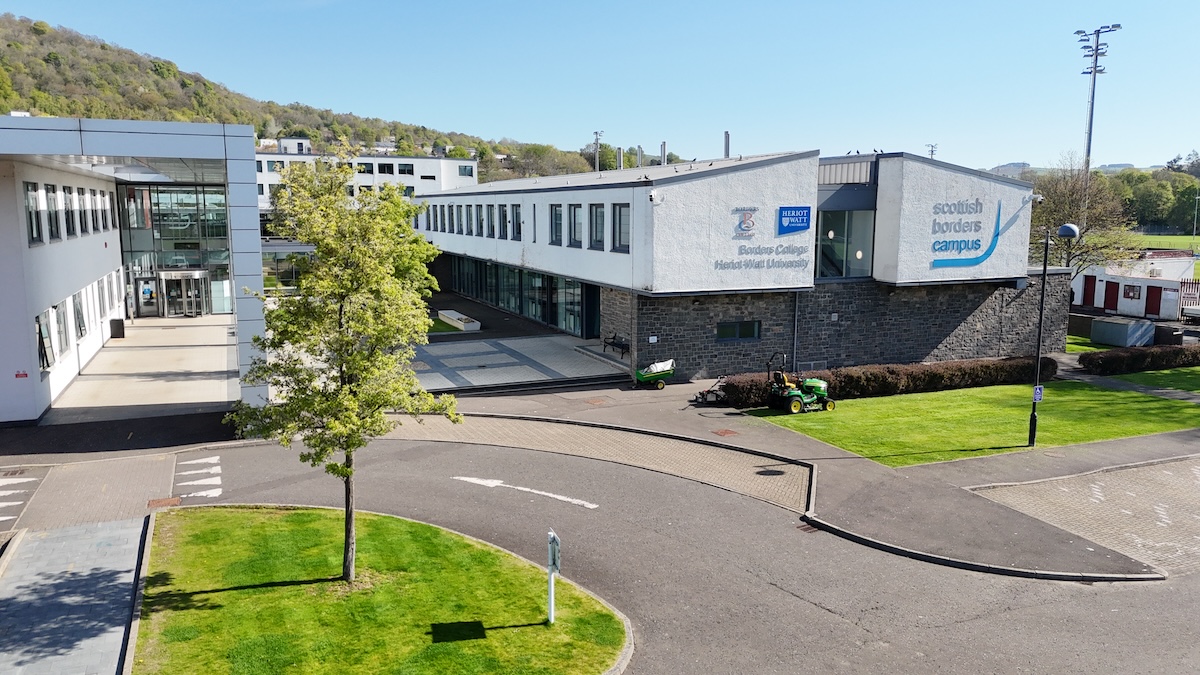
Three major skills and innovation projects in the South of Scotland have been invited to progress to the next stage of development as part of the Borderlands Inclusive Growth Deal. The move marks a significant milestone for the proposals that could transform skills opportunities for people across the region.
This represents a key milestone for the South of Scotland Skills programme, which sits within the 'Supporting Business, Innovation and Skills' theme of the wider Borderlands Inclusive Growth Deal. The projects focus on creating state-of-the-art facilities across the region's colleges to future-proof the rural economy - building a strong, adaptable workforce capable of supporting long-term economic growth, and the funding will roll out in alignment with projects meeting required programme milestones.
Borders College is developing two major projects to support the future workforce in the Scottish Borders.
The proposed Human Health Innovation Lab will create a dedicated learning environment to expand healthcare training opportunities up to SCQF Level 9. Working in partnership with NHS Borders, Edinburgh Napier University and private healthcare providers, the project aims to help address regional skills shortages and support more people into health careers.
Alongside this, the College is progressing plans for a Housing and Net Zero Accelerator Hub focused on sustainable construction and renewable technologies. The facility will provide training and upskilling opportunities to meet growing demand for the skills needed to support the transition to a low carbon economy.
Meanwhile, Dumfries and Galloway College will work on plans to host the Centre for Net Zero. Designed as a future-focused regional hub for green skills and low-carbon technology innovation, this project features a flexible, mobile training model specifically engineered to deliver accredited qualifications directly to remote and rural communities.
With the projects now advancing through the Borderlands pipeline, each college will now develop an Outline Business Case and a Full Business Case before funding for the projects is confirmed.
Borders College Principal and CEO, Pete Smith, commented:
“We are delighted to see both the Human Health Innovation Lab and the Housing Net Zero Innovation Hub progress to this stage. These exciting projects have the potential to transform learning opportunities across the Scottish Borders, creating modern facilities that will support future careers in healthcare, sustainable construction, and renewable technologies while helping to meet the needs of local employers and communities.
“If funding is awarded, these developments will provide students with access to industry leading learning environments, strengthen local skills pathways, support workforce growth, and help retain talent within the region. We look forward to the possibility of turning these ambitious plans into a reality for the benefit of current and future generations.”
Cllr Euan Jardine, Leader of Scottish Borders Council, said:
“The projects Borders College is developing are directly aligned to local and regional recruitment challenges and growth opportunities and aim to capitalise on the funding available through the Borderlands Inclusive Growth Deal.
“They would be exciting developments should they come to fruition and would support our young people as well as existing employees in the health and construction sectors who are looking to upskill.
“I look forward to seeing the next stage of the plans and the detail which will hopefully then enable funds to be released.”
Cllr Stephen Thompson, Leader of the Dumfries and Galloway Council, said:
“The progress of these projects is a positive step forward for Dumfries and Galloway College and the wider South of Scotland. The proposed Centre for Net Zero will bring new opportunities for our learners and students to access high-quality and relevant training. In a region like ours, where rurality presents challenges, a flexible approach to delivering accredited learning directly to people is particularly important.
“Investing in skills linked to low-carbon technology and innovation can strengthen our local economy and equip our workforce to play a leading role in tackling the climate emergency. Creating lasting benefits, supporting sustainable jobs, and empowering our young people will help our communities transition to a more resilient future.”
The South of Scotland Skills programme has an overall funding of up to £7m of Scottish Government capital funding, as part of the Borderlands Inclusive Growth Deal. In line with the South of Scotland Regional Economic Strategy, it aims to grow the local economy by training the next generation of healthcare and green-tech professionals right where they live. This approach is designed to support local families, fill vital regional vacancies, and ensure no community is left behind as the area grows.
More information about the projects can be found on the Borderlands website: www.borderlandsgrowth.com
Article credited to Borderlands Inclusive Growth Deal.